Armenian Proverbs and Sayings

Every discussion of heritage concerning Armenian and every textbook of Armenian almost always starts with the alphabet and takes off from there. What is missing in discussions of the language/culture is what is at the other end of the spectrum, namely the treasure trove of Armenian proverbs and sayings. Ironically, because these are in frozen form, one does not need to be a master of the language to quote them verbatim in the appropriate context.
This paper is inspired by many and varied sessions with proverbs and sayings that I have had with my students while teaching Armenian. The most memorable of these was when I witnessed the response of my students at UC, Berkeley. The interest and enthusiasm they had about learning and sharing one or more of these could not be compared with any other assignment. The most impressive part was when they all contacted Armenian speaking family and friends to collect proverbs that were used in their daily lives and shared those with their classmates. And what a variety there was!
What if, I would like to ask, in the effort to teach and preserve the language/culture, we start at this fascinating end of the spectrum? What if we create an online gathering place with attractive animations for many of the proverbs and sayings that have a very visual aspect. Here is a sample:
Բերնէ բերան, կ՛ըլլայ գերան։ // From mouth to mouth, it becomes a beam.
Տասը չափէ՛, մէկ կտրէ՛։ // Measure ten times, cut once.
Դուրսը քահանայ, ներսը սատանայ։ // On the outside a priest, on the inside a satan.
Չեմ ուզեր, գրպանս դի՛ր։ // I don’t want it, put it in my pocket.
էշն ի՞նչ գիտէ նուշը, կ՚երթայ կ՚ուտէ փուշը։ // What does the donkey know about the almond? He goes and eats the thorn.
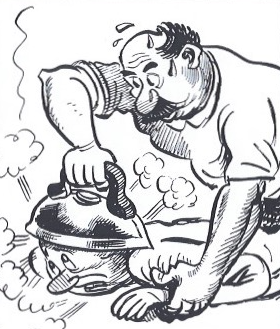
Գլուխս արդուկեց։ // He ironed my head (see the lead image above).
Ըսելէն, ըսելէն, բերանս մազ բուսաւ։ // From saying it and saying it, hair grew in my mouth.
Աչքս մտաւ։ // He entered my eye.
Աչքէս ելաւ։ // He exited my eye.
Աչքը ծակ է։ // His eye is hollow.
Աչքդ լոյս։ // Light to your eye.
You may have noticed that these all trigger a mental image, if we care to focus on them literally. However, most native speakers of Armenian use them without any awareness of that image. It is only when we translate them or focus on them carefully, as a student of the language would, that the imagery becomes both apparent and sometimes comical.
This brings up a closely related and very interesting topic in cognitive psychology, namely the abstract concepts and difficult situations that these sayings are referring to or commenting on. This is what makes them difficult to translate. The literal translation does not make sense because the connection between the concrete image and the abstract concept can only be learned by learning the context.
Here are a few more with short summaries of the context of use. Please note how abstract the concept being communicated is from the image that the proverb is presenting. It takes repeated uses to learn the complex thought that is being condensed into a single statement.
Բակը ծուռ է, կովը կաթ չիտար։ // The courtyard is crooked, the cow does not milk.
This is often said to comment on an excuse someone is giving which has absolutely no rational connection to whatever is supposed to be excused. Why would it make a difference to the cow whether the courtyard is crooked or not? There is often a tone of exasperation that accompanies this one.
Ինչ որ ցանես, այն կը հնձես։ // Whatever you saw is what you harvest.
An example of a situation that triggers this proverb is that of a parent who is doing something himself but who is criticizing his offspring for doing the same thing. The speaker is asking: What did you expect? Your child is copying you. Does the nonstop use of a cell phone come to mind? Please also note the farming image associated with the comment the proverb is making.
Ինչքան լեզու գիտես, այնքան մարդ ես։ // Whatever number of languages you know, you are that many people.
As a linguist, I have quoted this many times, both in Armenian and in translation, to emphasize the importance and the value of learning more than one language. Interestingly, a lot of research in cognitive psychology proves this old saying to be very relevant to the better development of the brain. The folk wisdom expressed in this one is quite remarkable.
Ծուռ նստինք, շիտակ խօսինք։ // Let’s sit crooked, but talk straight.
This often is said by someone who is addressing one or more people who, for whatever reason, have a strong opinion contrary to what the speaker has to say. He is there to correct something that he considers false. Again, a concept that is very far from the image presented.
Մէկ ծաղիկով գարուն չի գար։ // Spring does not arrive with one flower.
The context here is one person trying to take on a project that requires a group to succeed. It can also be used when a small part of a very large project has been finished but there is still plenty to do.
Դուն քուն, բախտդ արթուն։ // You asleep, your luck awake.
This is said when something good happens to someone without his involvement or awareness. This one combines the concrete and the abstract into one sentence. It is very challenging to conjure up an image for luck that is awake.
There are several collections of Armenian proverbs and sayings in print. Here are three notable ones with the links to access them:
- Dora Sakayan, Armenian Proverbs, Ann Arbor, 1995
- Ա. Մ. Սուքիասյան, Ս. Ա. Գալստյան, Հայոց Լեզվի Դարձվածաբանական Բառարան, Երեվան, 1975
- Պետրոս Ս. Բեդիրյան, Հայերեն Դարձվածքների Ընդարձակ Բացատրական Բառարան, Երեվան, 2011
There is also a very interesting collection of short stories about 50+ proverbs that gives them a real-life context:
- Ռոպէր Հատտէճեան, Հայկական Առածներ, Անթիլիաս, 1995.
Need I say that very few people care to go to these books, even if they are available digitally, to discover the world of these proverbs and sayings?
What many Armenians enthusiastically refer to is Alexander Saroukhan, a cartoonist who lived in Egypt decades ago and used many sayings to put together a book: Տե՛ս խօսքերդ See Your Words!*
He urges the reader at the end of his book to continue gathering and illustrating these expressions that the language has preserved over centuries.
Here are two cartoon examples from Saroukhan’s book:

I turned my ten fingers into candles, he was still not satisfied.
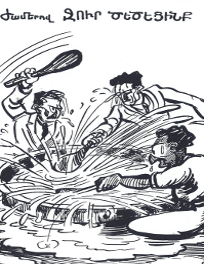
We beat water for hours. Said about a useless meeting.
The question is: Shouldn’t we create cartoons and animations that are more in a twenty-first century style? Shouldn’t we gather a large number of these sayings and proverbs into an online hub and share them with the Armenian communities globally? Accompanying these cartoons there would be both a transliteration and a translation. But, most importantly, the context in which each proverb is used would be discussed with examples. This is what communicates the history, the context, and the wisdom of the proverb or the saying.
To take one example:
Ըսելէն, ըսելէն, բերանս մազ բուսաւ։ – /əselen, əselen, peranəs maz poosav/ – from saying, from saying, in my mouth hair sprouted // I have said it so many times that it has sprouted hair in my mouth.
The person quoting this is so frustrated from saying the same thing to someone repeatedly that his/her tongue has grown hair, clearly an impossible phenomenon. It creates an impossible image to express the degree of frustration felt by the person saying it. One possible animation would have a face where the lips are moving and saying something. This would be repeated a few times. Gradually, the mouth will start opening and showing a tongue with a little hair at first but eventually covered with a lot of hair. Need I add that this animation would make the saying very memorable?
While the examples above are mostly from Western Armenian, the goal is to identify the dialectal sources of these proverbs wherever possible and to develop parallel paths for Eastern and Western Armenian. Also, wherever possible, to use whatever AI tools are relevant. For instance, an auditory dimension can be added to preserve these proverbs as they are spoken and not just written. This would not only make the animations livelier but also ease the repetition and learning of the proverb.
One more very valuable addition to the above would be the production of short videos where, in everyday conversations, one of the speakers comments on the topic of discussion with a proverb/saying. This would provide an excellent real-life language learning experience.
The initial steps towards the goal outlined above are under way. One possible domain name, hayeren.org, has been secured. Many experts have been contacted. (Remember: Մէկ ծաղիկով գարուն չի գար։ Spring does not arrive with one flower.) This group would include linguists, cartoonists/animators, and database wizards. This effort also requires stories contributed by Armenians from their daily use of proverbs they know.
Once this hub is ready to be shared, every Armenian organization, church, school would be notified. This hopefully will become, over time, the Internet centrale for hayeren. The creation of this centralized gathering place will accomplish several goals:
- It will bring a long overdue focus on the proverbs/sayings as critical elements of the language and the culture.
- It will generate a fresh discussion of the context and the use of these sentences and phrases which are collections of centuries of wisdom.
- It will give a tremendous boost to remembering these proverbs because of the animated images and spoken forms that accompany them.
- It will encourage Armenians around the world not only to learn the ones that are presented here but also to share and teach whichever appeals to them the most. They will also be asked to share the proverbs and sayings that their families use which are not in what is already gathered.
- Finally, and most importantly, it will create a digital global Armenian community that, in turn, will promote the learning and the use of the language, a highly desirable goal in the Armenian Diaspora!
In addition to bringing a long overdue focus on this critical part of the language, this is also a call for action to all those who would like to contribute in whatever way they can. If you are interested in participating, please contact hseropian@berkeley.edu
*All illustrations are from Alexander Saroukhan’s Տե՛ս խօսքերդ See Your Words!