The Armenians of Basra-Iraq: Rich Historical Legacy of Disappearing Community


The Armenian history and heritage of Basra, Iraq is rich and centuries old, yet it remains largely understudied and not widely documented. During their centuries-old presence in this port city in Southern Iraq, the Armenians contributed much to the city’s mercantile, trading and intellectual prosperity. Their historical presence can be compartmentalised into two historical periods: (i) the earlier historical presence since the seventeenth century and during the Ottoman period; (ii) a presence after the 1915 Ottoman genocide when many Armenian refugees and genocide survivors arrived and settled in the city. The earlier period has been characterised by its active Armenian trade and mercantile presence which, amongst other things, also saw successful trade connections with Europe, India, and the British East India Company in the eighteenth and nineteenth centuries. However, these interests declined and eventually ended by the second half of the twentieth century. This article provides a brief historical overview of this understudied Armenian diaspora community and its presence in the historic port city of Iraq.
The early historical period
From the historical perspective, some sources cite an earlier Armenian presence in Basra that dates back to medieval periods. These argue that the presence of an Armenian bishop named Solomon (Soghomon) of Akhlat, in Basra around 1222 as a pretext for such earlier presence. Bishop Soghomon was a native of Khilât or Akhlât (located at the western end of Lake Van in Armenia), which was a major Armenian cultural centre at the time.[1] Primary Arabic and Christian historical sources cite an Armenian ecclesiastical and monastic presence in Baghdad during the late Abbasid Caliphate period (11th– 13th) centuries that coincided with the above ecclesiastical presence in Basra. These monastic settings in Baghdad and possibly in Basra were likely to have been established from the remnants of the Armenians forcibly deported from Armenia to Baghdad during earlier Abbasid conquests of Armenia in the ninth century.[2]
Following the Mongol conquest of Baghdad (1258), the Armenian ecclesiastical and the intermittent mercantile presence in Mesopotamia entered a prolonged period of absence and obscurity with limited or no records of Armenians in Basra during this turbulent period. For approximately four centuries, the earlier Armenian presence in Mesopotamia either disappeared, migrated, or became assimilated into the broader socio-religious fabric of the region. However, a decisive new chapter in the history of Armenians in the region and Basra was inaugurated by the Ottoman–Safavid War of 1603–1618 and, more specifically, by the forced mass deportations carried out under Shāh ʿAbbās I (r. 1587–1629) during his campaigns of 1604–1605 in Armenia.
As part of a scorched-earth strategy that denied the advancing Ottoman forces a viable hinterland, ʿAbbās ordered the wholesale removal of Armenian population of estimated 300,000 deportees from the frontier territories of Nakhichevan, Julfa, the Ararat Valley, and surrounding regions into the interior of the Safavid realm.[3] The forced deportations of Armenians and their subsequent resettlements in New Julfa (on the outskirts of Isfahan) enabled the Julfan Armenian merchants in establishing a successful trans-imperial trading network. This network by the seventeenth century extended its reach across the Safavid, Ottoman, Mughal, and European commercial spheres. This network linked major trading and commercial centres such as Isfahan, Surat, Madras, and Bengal in the Indian Ocean with the Mediterranean and north-western European centres including Venice, Amsterdam, and London, and even reached to Southeast Asia and the Pacific.[4]
One of the key centres of this trading network was in Basra, established by the first wave of Armenian migrations to the city from New Julfa in the early seventeenth century following the above deportations. This early settlement was also likely to be supplemented by further small migrations of Ottoman Armenians to Baghdad and Basra from the neighbouring Ottoman-Armenian provinces during the Jelali movements and Shah Abbas’s deportations.[5] Secondary historical sources cite the presence of an Armenian Cross-Stone memorial in Basra (now disappeared) that dated back to 1691 as a symbol of this early settlement in the city.[6] It is likely that this memorial was erected by the Armenian survivors of the great plague of 1690 that devastated most of the city’s population.[7]
During the early decades of eighteenth century, and particularly after the Afghan invasion of Persia in 1722 and with the demise of New Julfa, some of the Armenian merchants decided to migrate to Basra.
They established a small, but very successful, trading and mercantile community which linked to the global Armenian trading networks elsewhere. By the middle of the nineteenth century, the Armenian trade in Basra thrived further by the political and commercial presence of the British, French, Dutch and other European powers in the city. These links also increased the political and trading influence of the Armenian merchants (Khodjas) in the city. During the first half of the eighteenth century, the earliest ‘ de facto’ resident agents of the British East India Company during the period (1755-1765). They also managed to capitalise on their wealth and privileged influence to enhance the Armenian community’s status among the ruling Ottoman elite in Baghdad and Basra. During this period, Armenian owned vessels operated regularly between India and Basra. The British Indian office records from the period between 1726- 1774 cite 11 leading Armenian merchants along with the 43 leading Arab and Jewish merchants in the city at the time. Some of the notable merchants cited in these and other historical records included the names of Khodja Petrus de’ Gregore (Bedros Krikorian), Agha Begros (Bedros) Setaghian, the Thaddeus family, and others.[8]
Some of the wealthy merchants were also philanthropists contributing to historical, ecclesiastical, and educational projects for the Armenian community in Basra. Throughout the eighteenth and nineteenth centuries there were three Armenian churches in Basra. However, today the ‘Surp Asdvadazin’ Armenian church is the only surviving church of these. It is located in the old quarter area of the city (Fig. 1). This church was originally built in 1736 by the wealthy Armenian merchant from Basra Agha Bedros Setaghian.[9] The church was rebuilt in 1907 by Armenian wealthy benefactors and contributions by the community in the city.[10]

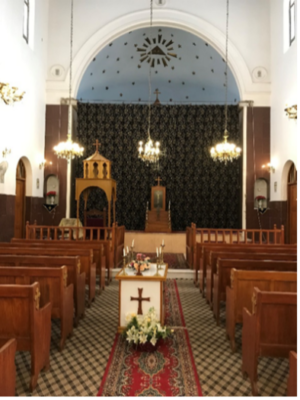
Fig. 1 The ‘Surp Asdvadazin’ Armenian Church in Basra and its interior (originally Built in 1736)
(Photo courtesy of the author, 2022)
Today, many of Basra’s earlier Armenian historical and heritage sites (e.g. the old Armenian cemetery, historical epigraphy, and heritage houses) from this earlier period are either lost or of unknown urbanized locations in the city. Throughout the nineteenth century and the early decades of the twentieth, the Armenians continued to excel in their trade and commercial activities and local political influence. Examples cited from this period include the role of the leading Armenian merchant and community leader in Basra Khatchik Migirdichian (‘Catchiek Mckertich’) who was the British Vice-Consul in 1857.[11] Following his death in 1858, his successor ‘Michael Minas’ took the same position and was also a local merchant. Other prominent Armenian merchants from Basra during this period included ‘Harutiun Baghdassarian’ who was a leading commercial entrepreneur in the city during late nineteenth century. ‘Migrdich Garibian’ who was also a leading trading entrepreneur. He was the father of Simon M. Garibian who later became one of the most prominent and wealthiest Armenian industrialist and philanthropist in Basra and Iraq during the first half of the twentieth century.[12]
In the early twentieth century, Mr. Dervichyan (OBE) was the honorary Belgian Consul in Basra.[13] It is also important to mention that there was a small Armenian Catholic congregation in the city during the later decades of the seventeenth century and throughout the nineteenth and early twentieth centuries. It was estimated that prior to 1914, there were 120 Armenians (35-40 families) living in Basra.[14] Throughout this historical period, the ‘native’ Armenian population of Basra remained relatively small as shown Table 1. It is important to note that these Ottoman-period population censuses were conducted in basic formats, and procedures at the time and are largely considered either incomplete or estimates.
Table 1. Estimates of the Armenians in Basra during the nineteenth and early twentieth centuries
| Year | 1881-1883 | 1897 | 1906-1907 | 1842 | 1888 | 1912 | 1912 |
| Census / Estimated Population | Ottoman | Ottoman | Ottoman | Armenian Church, Baghdad | Armenian Patriarchate Constantinople | Armenian Patriarchate Constantinople | Russian Consulate Basra |
| Armenians in Basra
| 35 (Male Population only) | 33 (Male Population only) | 36 (Male Population only) | 33 (Families) | 242 | 5000 (Apostolic) 1000 (Catholic) [Combined populations of the Vilayets Baghdad & Basra & Moussoul] | 1500 (Apostolic and d Catholics) |
Note: for the Ottoman census between 1881-1907, see endnote 15[15]; for the 1842 Armenian Church, Baghdad, see endnote 16[16]; for the 1888 Armenian Patriarchate Constantinople, see endnote 17[17]; for the 1912 Armenian Patriarchate Constantinople, see endnote 18[18]; for the 1912 Russian Consulate Basra, see endnote 19.[19]
The Post-1915 Period: The aftermath of Genocide and the twentieth-century settlements
World War I and its aftermath brought profound political, social, and economic changes that reshaped the Middle East, including the territories of the former Ottoman vilayets (provinces) of Baghdad, Basra, and Mosul, which were reorganised under British Mandate authority into modern Iraq. The onset of the Armenian Genocide, together with the subsequent collapse of the Ottoman Empire and the establishment of the Kingdom of Iraq under British tutelage in 1921, transformed the historical Armenian presence in Iraq. The indigenous Armenian communities in these Ottoman vilayets had also suffered from the consequences of the genocide, with many prominent Armenian and community leaders deported.
Many had died from disease, starvation, and the harsh conditions during their harrowing deportation ordeal. During and in the aftermath of the genocide, an estimated number of 20,000-25,000 Armenians predominately from the Western Armenian regions (now in Eastern Turkey) had managed to reach Mosul and Northern Iraq. The majority of those were eventually sheltered in a refugee camp near the town of Baqubah (33 miles northeast of Baghdad). The camp was set up by the British forces to accommodate 40,000-50,000 Armenian and Assyrian/Syriac refugee arrivals to Iraq.[20] In June 1921, the British authorities ordered the closure of the Armenian refugee camp in Baqubah (near Baghdad) that housed nearly 20,000 Armenian genocide survivors and decided to transfer the remaining refugees (approximately 12,000-14,000 Armenians) not already repatriated to different overseas destinations during the period (1921-1925) to an alternative camp set up near Nahr-Umar, 17 miles north of Basra, from where they could potentially be transported by sea via the Suez Canal to selected repatriation destinations.
By 1922, the living and health conditions in the Nahr-Umar camp became challenging as the camp by this time was solely run and administered by the refugees themselves with no further British support.[21] The benevolent efforts of the camp’s Armenian community leadership of Levon Shaghoyan (Levon Pasha), who was the Chair of Migration Committee, and Kegham Vartanian, supplemented by the financial support of Basra’s leading Armenian industrialist and philanthropist Simon Mekdrich Ghariabian, enabled the continued financial and administrative sustainability of the camp and its population’s health and social affairs.
Fig. 2 The few remaining traditional Armenian houses in Armenian Camp (Camp Al Armen) in the Al-Ashar district – Basra

Source: Photo courtesy the author, 2022
Prior to the camp’s closure in 1929, it remained to house 3000 Armenian refugees, of whom approximately 500 skilled Armenians from the camp were offered employment at the Abadan refinery in Persia, and another 470 or so refugees and their families with farming and agricultural background (mostly from the Van and Vaspurakan regions) were resettled in the Armenian village of Havresk (Havresc) near Mosul (now in the Duhok region in the Kurdistan Autonomous Region of Iraq).[22]
The remainder subsequently resettled in Basra. Those who eventually settled in the city centre developed and owned their own houses and established the Armenian camp (Camp El Armen) near Al –Ashar district in the city centre (Fig. 2), that remained predominantly Armenians until the late 1980s. Many others settled in Margil (Ma’qil, Shaiba, and Fao districts The Margil district (Fig. 3) in particular emerged as a major Armenian housing settlement of those refugees. The area was a key river port and commercial-industrial zone along the Shatt al-Arab, but it was developed by the British mandate authority into a major British logistical and transit hub, closely tied to the imperial trade networks and the expanding oil economy in the 1920s and beyond.
Fig. 3 Overview of the Margil district in Basra, c. 1930s

Source: Eldorado Photo: Baghdad- Photographer Hovaness Koyomajian; courtesy of the author’s collection
The settled Armenians in Margil worked in these wharfs, logistical centres, and railways. In 1931, the Armenian primary school in Margil was opened and housed 15-20 students, increasing to 260 students by the late 1950s. It is also of note that skilled Armenians were trained and worked since the 1920s and beyond in the Maude General Hospital of Basra, which was originally built and opened by the British in 1916 (Fig7). In 1957, a total of 1782 Armenians (390 families) were living in Basra, with 968 Armenians living in Margil district.[23]
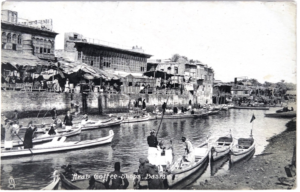
Fig. 4 Overview of Al- Ashar district in Basra, c. 1918
Source: Photo courtesy of the author’s collection
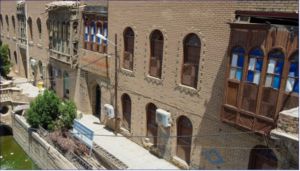
Fig. 4 shows and overview of Al-Ashar area in the city, and when the Armenians refuges settled the city. Fig. 5 shows the area in 2022, following UNESCO sponsored renovation of some of it heritage houses. These once housed among other Arab merchants, the wealthy Armenian merchants in the late nineteenth and early twentieth centuries.
Fig. 5 Overview of Al Ashar district in Basra, 2022
Source: Some of UNESCO renovated heritage houses
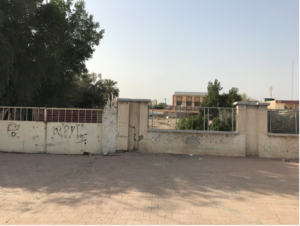
Those who were resettled in the city, along with their descendants, constitute the majority of the present-day Armenian community in Basra. By the late 1950s, the Armenians in Basra established a vibrant community with their own schools, social, and sporting centres with majority working in different professional and skilled positions. Fig. 6 shows the now demolished Armenian school in Al-Ashar near the Armenian camp in the city.
Fig. 6 The Al-Ashar location of now demolished Armenian School in Basra
Source: Photo courtesy the author, 2022
The aftermath of the 14th July 1958 military coup d’état (widely called the July revolution in Iraq) that violently overthrew the Hashemite monarchy irrevocably altered the future of the Armenians in Iraq and Basra. The gradual erosion of the social and economic position attained by the Armenian community in Basra during the preceding four decades became increasingly evident following the establishment of republican Iraq after 1958 as successive political transformations reshaped state-society relations. This narrowed the space available for its minority communities, including the Armenians.
The Armenians in Basra faced major challenges and continued their decline by internal migration and emigration waves, especially in the aftermath of the Iraq-Iran war (1980-1988), the first Gulf War of 1991, and the decade-long economic blockade that eventually eroded the community’s future prospects. The post-2003 period in Iraq was a pivotal turning point for the Armenians of Iraq, including those in Basra. The current status of the Armenians in Basra remains fragile and influenced by the prolonged political instability, economic challenges, and persistent security concerns that pose existential challenges to their long-term survival. Decades of conflict and out-migration have significantly eroded the demographic, institutional, and cultural trajectories of the community.
Once a vibrant mercantile centre and a major hub for Armenian communal life in Iraq since the seventeenth century, Basra now stands at a critical historical juncture for the Armenians. In the last few decades, the Armenian presence in the city has undergone a sustained demographic decline, shaped by successive waves of wars, political instabilities, displacements, and socio-economic changes. Today, there are between 200-300 Armenians left in Basra with continued decline
A once-flourishing community faces the very real prospect of local extinction, with its remaining population existing in an increasingly fragile and uncertain state, raising urgent questions about cultural continuity, heritage preservation, and the long-term viability of minority identities in Iraq.
Fig. 7 Maude Hospital in Basra, c. 1920s

Source: Eldorado Photo: Baghdad- Photographer Hovaness Koyomajian : courtesy of the author’s collection
References
Alpoyajian, A. (2003). Iraki hayerə [The Armenians of Iraq] (V. Grigoryan, Ed.). Matenadaran Mesrop Mashtots Research Institute of Ancient Manuscripts, Yerevan (In Armenian).
Abdullah, T. A. J. (2001), ‘Merchants, Mamluks, and Murder: The Political Economy of Trade in Eighteenth Century Basra’, State University of New York Press, 2001, Pp.xviii +180, ISBN: 0791448088.
Abrahamian, A. K. 1967. Hamarod Onrvakidz Hay Kaghtavayreri Badmoutian [Armenians of Iraq]. In Concise Outline of the History of Armenian Expatriate Communities], Vol. I. Yerevan: Haybedhrad.
Adamov, A. (1912), Irak Arabskii. Bassorskii Vilaiet v ego Proshlom i Nastoyashchem, [‘Arab Iraq- The Basrah Province in Its Past and Present ], St. Petersburg (In Russian). Arabic Translation by Salih Al-Tikriti [Wilayat Al-Basra fi Madi-ha wa Hadiri-ha] (2009) , Dar Al-Warrak Publishing, Beirut and London.
Armenian Diocese of Iraq (2005), A Brief History of the Diocese of the Armenian Apostolic Church in Iraq, Baghdad [Iraqa Hai Teme Hamarat Batmtyoun], In Armenian, Unpublished Diocese document, Prepared bv ‘The Historical Committee of the Armenian diocese of Iraq, Baroir Orjanian, Abraham Sedrak Ohanian, Dr. Vehuni Minasyan, Baroir Hakobyan, Dr. Zohrab Nakhshkerian and Alice Astjian’ (Eds.), Unpublished
Aslanian S. D. (2014), From the Indian Ocean to the Mediterranean: The Global Trade Networks of Armenian Merchants from New Julfa, University of California Press.
Austin H. H. (1920), ‘ The Baqubah Refugee Camp- An account of work on behalf of the persecuted Assyrian Chrisitians’, The Faith Press, London- Manchester.
Bābū Isḥāq, R (1960), ‘Aḥwāl al-Naṣārā fī ʿAhd al-Khilāfa al-ʿAbbāsiyya [The Conditions of the Christians during the Abbasid Caliphate]. Maṭbaʿat Sahfiq, Baghdad.
Budge, E. A. Wallis, ed. and trans (1886). The Book of the Bee. Oxford: Clarendon Press.
Carmeliate Archives (1691) , Archivum Generale Ordinis Carmelitarum Discalceatorum (AGOCD), Rome, MS O.C.D. 184a, Annales de la mission de Bassorah, fols. 54–55.
Istepanian, R. (2024), ‘The Armenians of Iraq: A historical perspective and modern narrative, Proceedings of the 30th. Heritage day Dedicated to the Armenian community of Iraq- Mesopotamia, Toronto, Canada, pp. 215-345.
Karpat K. H. (1985), ‘Ottoman population 1830-1914: Demographic and social characteristics’, University of Wisconsin Press: Madison, ISBN 0-299-09160-0.
Kevorkian, G. (1957), ‘Amenooyn Dareekeerk: Mengh Yev Mer Entertzoghnere [Everyone’s Year Book: The historical past of the colony and the first Armenians in Iraq], New migration and settlement, Part-7, Beirut, Lebanon.
Kouymjian, D. (1997). “Armenia from the Fall of the Cilician Kingdom (1375) to the Forced Migration under Shah Abbas (1604).” In The Armenian People from Ancient to Modern Times, Vol. I: The Dynastic Periods: From Antiquity to the Fourteenth Century, edited by Richard G. Hovannisian, New York: St. Martin’s Press.
Ormanian, M. (1912). The Church of Armenia: Her History, Doctrine, Rule, Discipline, Liturgy, Literature, and Existing Condition, A.R. Mowbray & Co., London.
Matthee R (2006), ‘Between Arabs, Turks and Iranians: The town of Basra’, Bulletin of the School of Oriental and African Studies, vol. 69 (1), 53-78.
Melkonian V.( 1957), An Historical Glimpse of the Armenians in Iraq – From the Earliest Times to the Present, pp.1-25, The Times Press, Basra, Iraq.
Shemmassian, V. L. (2021). The repatriation of Armenian refugees from Iraq to Soviet Armenia, 1921–1925’, in Dakessian, A. (ed.) Armenians of Iraq: Proceedings of the Conference (29–31 May 2017). Beirut: Haigazian University Press, pp. 247–266
Wilson, A. T. (1930), ‘Loyalties Mesopotamia 1914-1917: A personal and historical records’, Oxford University Press, London.
[1] Budge, p.iii-x, Alpoyajian, p.89.
[2] Babu Ishaq, p.128-129.
[3] Aslanian, p.23-26. The number of deportees varies from 80,000 to 400,000, but most contemporary accounts put the number to 300,000.
[4] ibid, p.45-85.
[5] Kouymjian, p. 19-20.
[6] Melkonian, p. 18-19, Kevorkian, p.420.
[7] Matthee, p. 73; Carmelite Archives (AGOCD) fols. 54-55.
[8] Abdullah, p. 95-96; p.109-110.
[9] Kevorkian, p. 419-420.
[10] Ibid, p. 420; Melkonian, p. 19-20.
[11] Melkonian, p. 12
[12] Ibid, p.22.
[13] Wilson, p. 245.
[14] Melkonian, p. 21.
[15] Karpat, p.162–163 (1881–1883 Basra data), p. 168 (1897 data), and p. 170–171 (1906–1907 data). The data from these Ottoman censuses show the male Armenian populations of Basra only.
[16] Armenian Diocese of Iraq (Unpublished Data).
[17] Abrahamian, p. 47.
[18] Ormanian, p. 240 (Appendix II).
[19] Adamov, p.141.
[20] Austin, p. 4-12.
[21] Shemmassian, p. 246-248.
[22] Istepanian, p. 334-335
[23] Kevorkian, p.423.